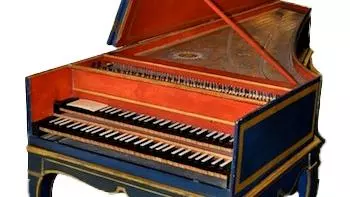

Jean Goermans Double Manual Harpsichord, Paris, 1750
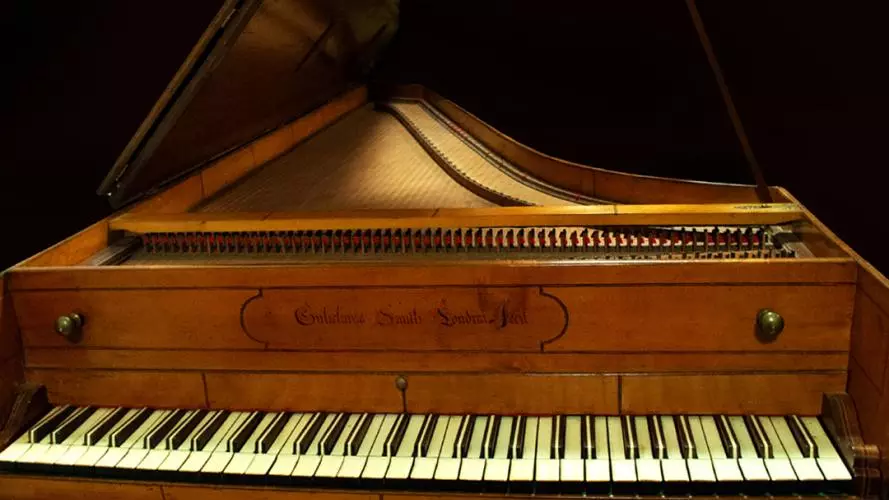
This double manual harpsichord was made by Jean Goermans the Elder in Paris, dated 1750 on one of the jacks. It spans five octaves (FF-f''') and features two 8' ranks, one 4' rank, and a buff batten of soft leather pads, which can be slid against the upper manual 8' to subtly alter the tone.
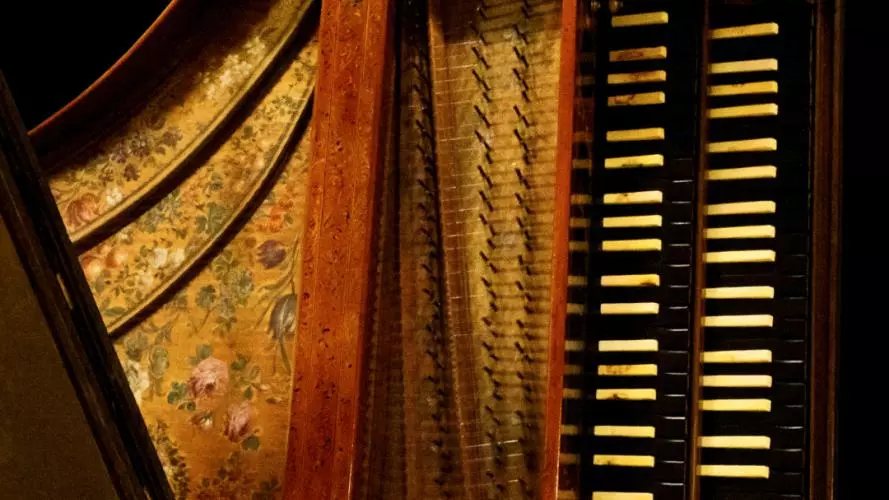
A superb example of a mid-18th century large French harpsichord, it has a soundboard grain running parallel with the spine and a beautifully decorated soundboard. Instruments like this are the type for which François Couperin composed, and many performers consider them ideal for 18th-century French repertoire. While French harpsichords excel for French music, each national style has its own tonal character: German instruments suit Bach, and English instruments, such as those by Tisseran or William Smith, suit Handel.
Jean Goermans, of Flemish descent like many of the great harpsichord makers before him, spent his entire career in Paris and became a Master before 1730.
This instrument is believed to have originated from the Château de Landres in Mauves-sur-Nuige, France, where it may have remained since the 18th century. It has been carefully restored by Christopher Nobbs to approximate its original condition. Previously part of the Michael Thomas Collection, it was generously gifted by the Austin & Hope Pilkington Trust.
Technical Details:
-
Range: FF-f''' (61 notes; originally FF-e''', extended at the treble by keyboard modification)
-
Stops: 2 x 8' + 1 x 4' + buff on upper manual; shove coupler
-
Stop levers: 2 steel, on the left side of the wrestplank
-
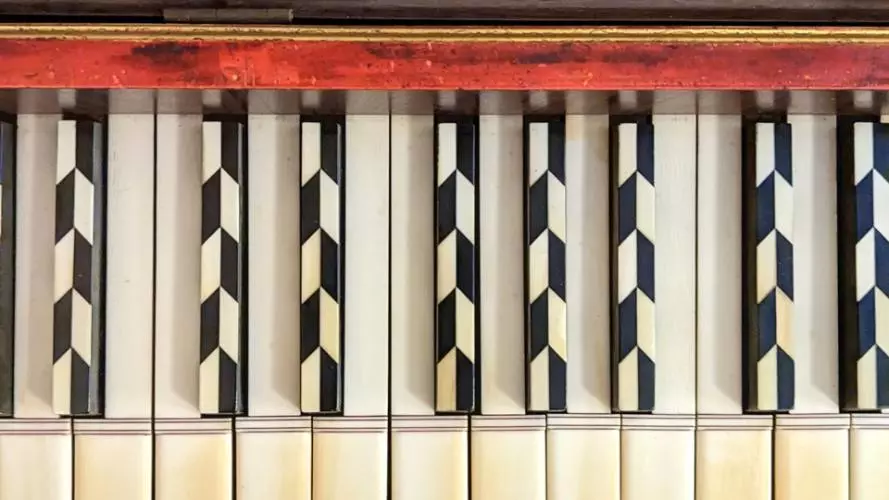
Keyboard: ebony naturals, bone on stained fruitwood sharps
-
Hinges: 3 small plain brass hinges for lid; 3 pairs of butt hinges for lid flap
-
Exterior: blue with gold stripe; interior: red
-
Soundboard: decorated (identified by Dr. Sheridan Germann as the work of the Blanchet Painter); gilt rose in Ruckers style
-
Stand: original, with 7 cabriole legs and concealed drawer
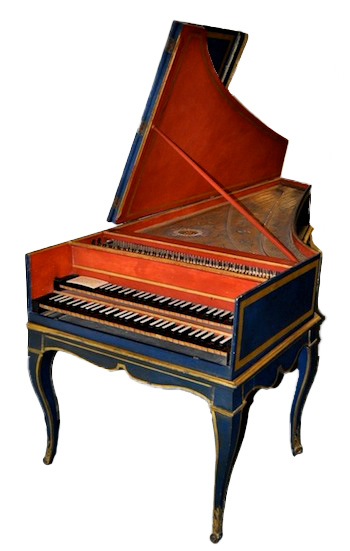
This double manual harpsichord, made by Jean Goermans in Paris, 1750, features five octaves, two 8' ranks, one 4' rank, a buff stop on the upper manual, and a beautifully decorated soundboard. Its original stand and rich French Baroque tone make it a remarkable historic instrument.The Bate Collection of Musical Instruments
The Bate Collection · Harpsichord