
Military Serpent
The serpent is a bass brasswind instrument and was a predecessor to the tuba. Its snake-like form helps to position the finger holes within reach of the player's hands.
The serpent was said to accompany the lower voices for church services from the late 16th century. Its warm, resonant sound complemented male voices, and it found favour in English church bands during the 18th and 19th centuries. In churches that could not afford organs, the serpent sometimes accompanied the cello and the bassoon. As a wind instrument that could capably play the bass line, the serpent became a popular military band instrument during the mid 18th century. With shifting practices and use, makers saw the opportunity for practical modifications that resulted in a diversity of innovative forms. It was sometimes used as a bass voice in the orchestra, notably by Handel, Haydn, Berlioz, and Mendelssohn.
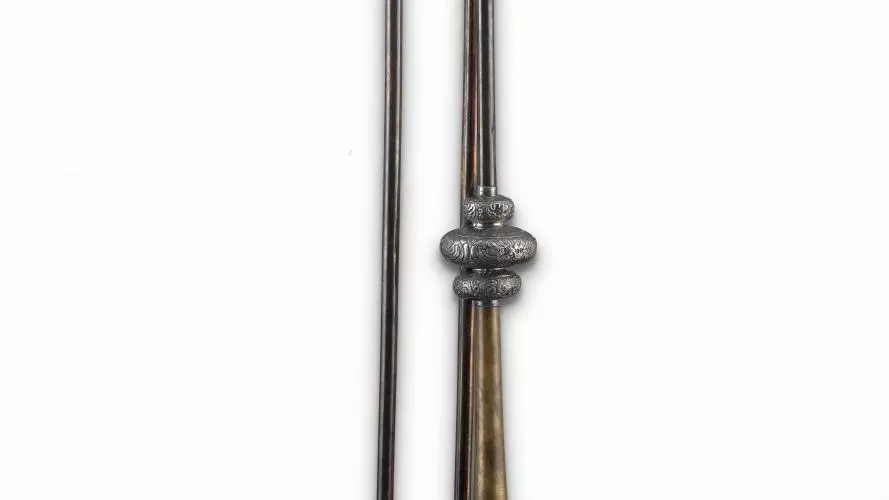
The English military serpent's intonation was improved by the addition of three keys. It was not long until 19th-century makers, such as Thomas Key in his workshop in London, began adding even more keys. His seven-key serpent features an out-turned bell that was thought to improve the projection of the instrument's sound. The inside of the bell is painted red, in the tradition of English serpents. Thomas Key's name and address (20 Charing Cross, London) are stamped on the bocal mount (the curved, tapered tube). The inscription on the serpent's bell mount, which reads 'Waterloo/June 18th 1815', raises the question of whether this instrument was played at the Battle of Waterloo.
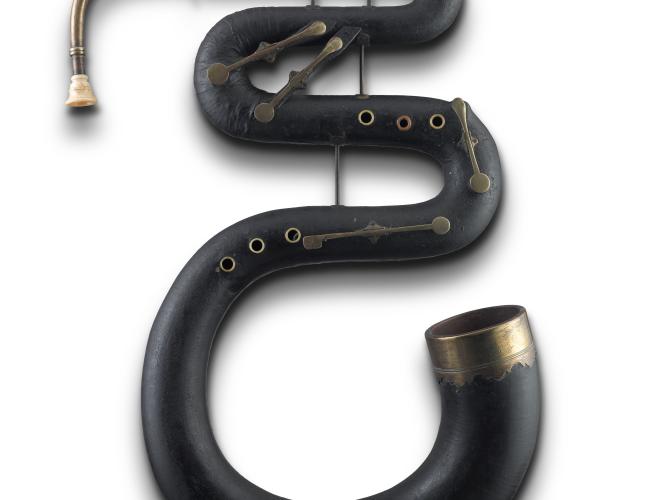
Picture of Military Serpent by Thomas KeyBate Collection of Musical Instruments
Listen to the Serpent!
The Bate Collection · Military Serpent