
Bassano Basset Recorder
The recorder was one of the most popular instruments of the Medieval and Renaissance eras.
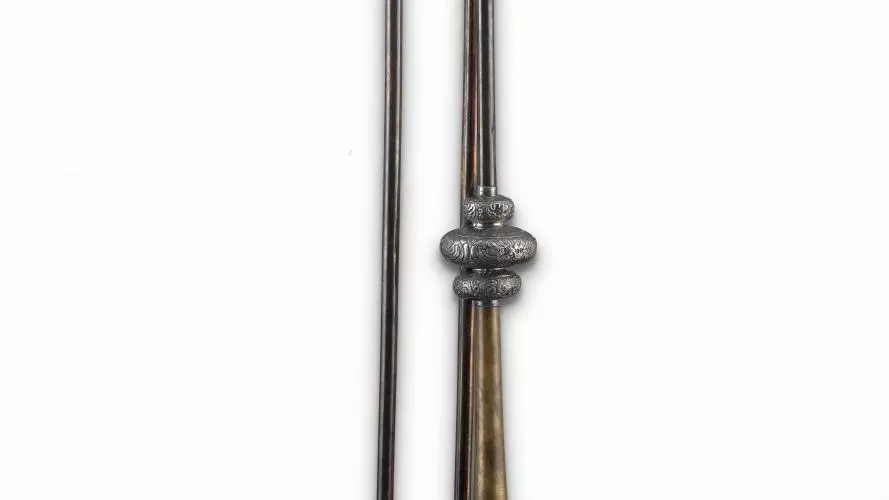
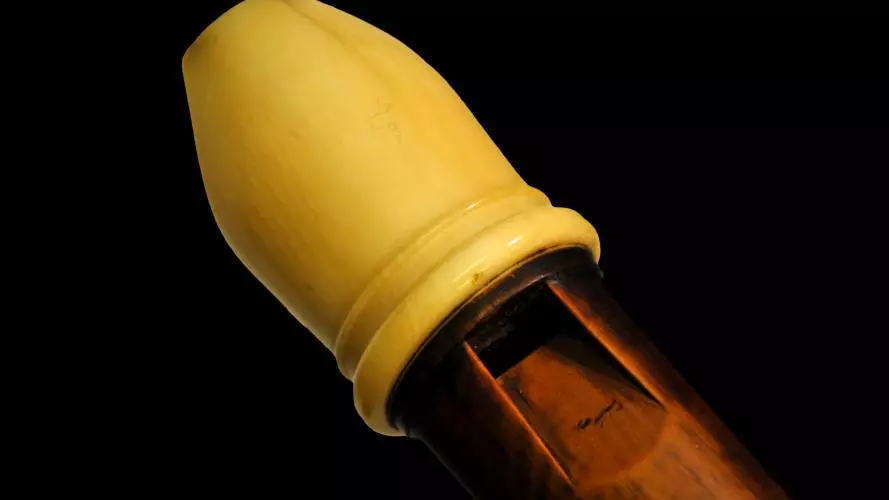
One of the earliest examples in our collection is the Bassano Basset Recorder, crafted from a single piece of maple. It is attributed to the celebrated Bassano family, renowned Italian makers whose instruments were highly prized across Europe.
Recorders from the 16th century typically featured a wide, almost cylindrical bore, giving them a stronger, more powerful sound. This particular instrument also includes a beautifully decorated fontanelle (the protective cover over the key), a design detail characteristic of the period.
Near the top of the recorder, you'll notice an intriguing mark resembling two pairs of exclamation points (!!!!). This closely matches the Bassano family's distinctive trademark which is a subtle but fascinating detail that connects the instrument to its historic makers.
The Bassano family took their name from the town of Bassano del Grappa, although the family had relocated by the early sixteenth century. While firm documentary evidence of their religious background has not survived, "Bassano" was a recognised Jewish surname, and it has been suggested that the family may have left the town in 1516, when Jewish residents were expelled.
Their coat of arms featured three silkworm moths and a mulberry tree, imagery associated with silk production, which may indicate earlier involvement in the silk trade. This recorder bears the family's distinctive moth stamp on the rim of its bell, strengthening the connection to the Bassano workshop tradition.
During the sixteenth and early seventeenth centuries, members of the Bassano family were active in the musical life of both Venice and London. By the late 1530s, several Bassano brothers had established themselves as musicians at the court of Henry VIII, where they contributed to the vibrant musical culture of the Tudor court.
The family later moved within prominent cultural circles and have been linked to William Shakespeare. Baptista Bassano's daughter Emilia has been proposed by some scholars as a possible candidate for the "Dark Lady" of Shakespeare's sonnets, and it has also been suggested that Shakespeare may have drawn inspiration from the family's name for the character Bassanio in The Merchant of Venice.

Crafted from a single piece of maple, this sixteenth-century basset recorder is attributed to the renowned Bassano family of instrument makers. Its wide, almost cylindrical bore produced a strong, powerful sound, while the decorative fontanelle protecting the key reflects the craftsmanship of the Renaissance period. The recorder bears the Bassano family's distinctive maker's marks, including a moth stamp on the bell, linking it to one of Europe's most celebrated musical workshops. Members of the Bassano faBate Collection of Musical Instruments